
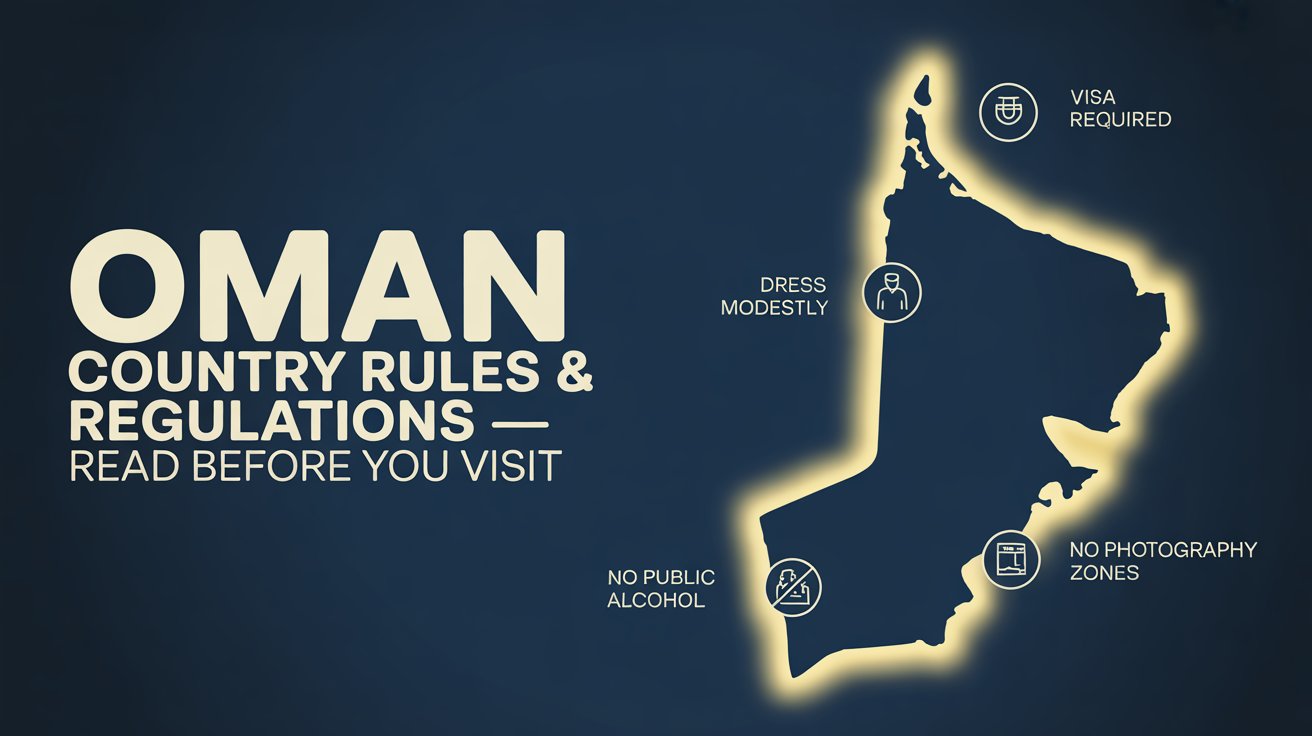
Did you know that Oman welcomed over 4 million international tourists in 2023, making it one of the top 20 best-performing destinations globally according to the UN World Tourism Organization? (Source: Travel and Tour World) That number tells you just how popular this beautiful country has become. But before you pack your bags, understanding the Oman country rules and regulations is not optional, it is essential.
Oman is a welcoming nation, but it also has a deeply rooted culture, Islamic traditions, and strict legal standards. Knowing the rules before you land helps you enjoy the country without facing unnecessary trouble.
Why Understanding Oman Country Rules Is Important Before Travel
Oman is not like most tourist destinations in Europe or Southeast Asia. It is a Muslim-majority country governed by a mix of civil law and Islamic principles. The Oman country rules apply to locals and tourists equally.
Ignoring these rules, even unintentionally, can lead to fines, detention, or even deportation. Most tourists who face problems in Oman do so simply because they were not informed beforehand.
How Oman Laws for Tourists Differ from Other Destinations
The Oman laws for tourists are stricter than what you may be used to in Western countries or even other parts of the Middle East. Public behaviour, dress code, alcohol consumption, and photography all have specific legal guidelines here.
For example, what may be a normal social gesture at home, like a public hug between partners, can attract fines or unwanted police attention in Oman. The country prioritizes public decency, modesty, and respect for religious customs above personal freedom in public spaces.
What Travelers Should Know to Avoid Mistakes in Oman
The biggest mistakes tourists make in Oman are: dressing immodestly, drinking alcohol in non-licensed areas, taking photos of restricted places, and displaying affection in public. These are not just cultural faux pas, many of them are illegal.
A well-prepared traveler is a safe traveler. This guide walks you through everything you need to know so your trip is smooth, enjoyable, and fully compliant with local expectations.
Also Read This: Top Common Oman Visa Rejection Reasons
Oman Entry Rules and Travel Requirements
Before you even board your flight, there are key entry requirements you must meet. These are part of the core Oman travel rules that every international visitor must follow.
Passport Validity and Visa Rules Before Entering Oman
Your passport must be valid for at least 6 months from your date of entry into Oman. This is a non-negotiable requirement at the border. If your passport is close to expiry, renew it before traveling.
Most nationalities need a visa to enter Oman. The good news is that Oman has a straightforward e-Visa system that allows eligible travelers to apply online before arrival. You can apply for your Oman tourist visa online at OmanVisa.org, where processing typically takes 24–48 hours with a very high approval rate.
Important Oman Travel Rules for International Visitors
Here are the key entry rules every visitor should know:
- Passport must be valid for at least 6 months
- Visa must be obtained before arrival (for most nationalities)
- You must have a return or onward ticket
- Proof of accommodation (hotel booking or invitation letter) is required
- Evidence of sufficient funds for your stay may be asked
Oman now offers visa-free entry for nationals of 103 countries for up to 14 days, making access easier than ever. (Source: Wikipedia)
Documents Tourists Should Carry While Traveling to Oman
Always keep the following documents on you throughout your trip:
| Document | Why You Need It |
| Valid Passport | Required at entry, hotels, and car rental |
| Visa / e-Visa printout | Proof of legal entry authorization |
| Return / onward ticket | Required at immigration check |
| Hotel booking confirmation | Proof of accommodation in Oman |
| Travel insurance | Strongly recommended for medical emergencies |
| Emergency contact card | In case of accidents or detainment |
Make digital copies of all documents and store them in your email or cloud storage as a backup.
Rules Related to Visa Duration and Overstaying in Oman
Overstaying your visa in Oman is a serious legal offense. Depending on the visa type, you are allowed to stay between 10 to 30 days from the date of entry.
- A standard tourist visa allows a stay of up to 30 days
- A 10-day visa is available for short visits
- Multiple-entry visas are valid for up to 1 year, with a maximum of 30 days per stay
- Tourist visas cannot be extended — you must exit and reapply
If you overstay, you may face fines, a ban from re-entering Oman, or even detention at the airport. Always track your visa expiry date carefully. For full details on visa types and durations, check the Oman Visa Types page.
Oman Laws for Tourists You Should Know
Oman has a comprehensive legal framework that covers everything from public conduct to social media usage. As a visitor, you are subject to these laws the moment you enter the country.
General Laws Tourists Must Respect in Oman
Here is a quick list of essential Oman laws for tourists:
- Public decency laws prohibit indecent clothing, public displays of affection, and disruptive behavior
- Defamation laws apply online too — posting offensive content about Oman, its government, or its leadership can lead to prosecution
- Drug laws are extremely strict — possession of even a small amount can result in imprisonment
- Alcohol laws restrict consumption to licensed hotels and restaurants only
- Photography laws prohibit filming government buildings, military installations, and people without consent
- Traffic laws include zero tolerance for drunk driving
Legal Consequences of Breaking Rules in Oman
The consequences for breaking Oman’s laws are serious and can include:
- Fines ranging from small amounts to thousands of Omani Rials
- Deportation and a ban on re-entry
- Imprisonment for severe offenses including drug possession, public indecency, or defaming the state
- Confiscation of devices if found to contain offensive or illegal content
Ignorance of the law is not accepted as a defense in Omani courts. It is your responsibility as a visitor to know the rules before you arrive.
Why Visitors Should Follow Local Laws and Traditions
Beyond legal consequences, following local laws and traditions shows respect for the Omani people and their way of life. Oman is consistently ranked as one of the safest countries in the Middle East, and that safety is directly linked to the respect citizens and tourists have for the law.
Travelers who respect the culture consistently report having deeply positive experiences. The more respectful you are, the more warmly you will be welcomed.
Common Legal Mistakes Tourists Make in Oman
Based on reported incidents and travel advisories, here are the most common legal mistakes tourists make:
- Drinking alcohol in public or on the street
- Taking photos of police stations, military sites, or government buildings
- Using offensive language or gestures in public
- Public displays of affection, including kissing or prolonged hugging
- Dressing immodestly in public areas, markets, or religious sites
- Posting critical content about Oman on social media while in the country
- Carrying prescription drugs without the proper documentation
Check Out Our Guide on: Top 12 Unforgettable Things to Do in Oman
Choose Your Country and Get Your Oman eVisa Instantly
| United Arab Emirates | Qatar | United Kingdom | Kuwait |
| Bahrain | France | Australia | United States |
| Germany | Switzerland | Italy | Ireland |
| Netherland | Spain | South Africa | Saudi Arabia |
Oman Customs and Etiquette for Foreign Travelers
Understanding Oman customs and etiquette goes beyond following the law. It means genuinely connecting with the local culture and showing that you value it.
Respecting Local Culture and Islamic Traditions
Oman is a deeply Islamic country. Religion shapes the rhythm of daily life — from the call to prayer five times a day to the rules around Ramadan. During the holy month of Ramadan, visitors should avoid eating, drinking, or smoking in public during daylight hours.
If you are invited to break the fast with a local family, accept it graciously — it is a sign of great respect and a genuine cultural experience that very few tourists get to enjoy.
Greetings, Manners, and Polite Behavior in Public
Omani people are known for their warmth and hospitality, but their greetings come with specific etiquette:
- Between men: A handshake is the standard greeting
- Between men and women: Do not initiate physical contact unless the Omani person offers first
- Common greeting: “As-Salamu Alaykum” (Peace be upon you) is always appreciated
- Do not rush: Omanis value slow, courteous conversation — be patient and polite
- Accept hospitality: Refusing offered coffee, tea, or dates repeatedly can be considered rude
As the Rough Guides note on Oman etiquette, physical modes of greeting are important, members of the opposite sex do not generally touch, and it is polite to wait before offering a handshake to someone of the opposite gender. (Source: Rough Guides)
Dress Code Expectations for Men and Women
The general rule for Oman customs and etiquette around dress is simple: cover your shoulders, arms, and knees in public. This applies to both men and women.
- Women should wear loose, modest clothing — long skirts or trousers, and sleeved tops
- Men should wear long trousers and shirts — avoid singlets or very short shorts
- Swimwear is acceptable only at hotel beaches and designated swimming areas
- Tight, sheer, or revealing clothing is not appropriate in public spaces
Etiquette Rules to Follow in Mosques and Religious Places
Visiting a mosque in Oman is a privilege, and specific rules apply:
- Remove your shoes before entering
- Women must wear a full-length garment, long sleeves, and a headscarf
- Men must avoid shorts or sleeveless tops
- Keep your voice low and avoid disruptive behavior
- Do not enter during prayer times unless you are there to pray
- Ask for permission before taking photos inside or around the mosque
Also Check Out This: Explore Top 5 Cities of Oman: Complete Guide
Oman Public Behaviour Laws Every Tourist Must Follow
Oman has clearly defined Oman public behaviour laws that govern how people should conduct themselves in shared spaces. These are not just social suggestions — they are enforceable by law.
Here is a summary of what is and is not allowed in public:
| Behavior | Status in Oman |
| Holding hands (married couples) | Generally acceptable |
| Kissing or hugging in public | Illegal / can result in fines |
| Loud or aggressive behavior | Illegal — seen as disrespect |
| Cursing or rude gestures | Can be prosecuted |
| Eating/drinking during Ramadan in public | Prohibited and fineable |
| Drinking alcohol in public | Illegal |
| Playing loud music in public spaces | Frowned upon; can attract attention |
| Littering | Fined |
Yelling, losing your temper, or making rude gestures in public is taken very seriously in Oman. The country values patience and politeness as core social values. What may seem like a minor outburst to you can be seen as a punishable offense here.
If you encounter traffic jams, service delays, or frustrating situations, stay calm. Omanis always prefer a composed, polite response over aggression.
What Is Not Allowed in Oman for Tourists
This is perhaps the most important section for first-time visitors. Knowing what is not allowed in Oman for tourists can save you from serious legal trouble.
Restricted Activities Tourists Should Avoid
- Public displays of affection beyond handholding for married couples
- Criticizing the Sultan, the government, or Islam publicly or on social media
- Participating in any political activity or protest
- Using a drone without a valid license from Oman’s Civil Aviation Authority
- Gambling of any kind (fully illegal)
- Engaging in same-sex relations (criminalized under Omani law)
Prohibited Items and Illegal Substances in Oman
Some items are outright banned from being brought into or used in Oman:
- E-cigarettes and vaping devices are completely illegal in Oman
- Pornographic material of any kind
- Items depicting nudity or explicit sexual content
- Weapons and firearms without proper clearance
- Pork products (restricted to specific licensed venues only)
- Certain prescription medications without a doctor’s letter — always carry your prescriptions
Rules Around Alcohol, Drugs, and Smoking
Alcohol is legally available in Oman, but only in licensed venues such as hotels, restaurants, and clubs. You must be at least 21 years old to purchase or consume alcohol. (Source: Oman Foreign Ministry)
- Drinking alcohol in public, on the street, or on the beach is illegal
- Driving under the influence carries severe penalties
- Bringing alcohol into Oman without declaration is prohibited
Drugs carry some of the strictest penalties in Oman:
- Possession of even a small quantity can lead to imprisonment
- Trafficking carries the possibility of the death penalty under Omani law
- This includes recreational cannabis, even if it is legal in your home country
Smoking is permitted in designated areas. It is not allowed in most public buildings, restaurants, or enclosed spaces.
Photography Restrictions in Sensitive Places
Always ask for permission before taking photos of people, especially women. Taking photos of the following is strictly prohibited:
- Government buildings and royal palaces
- Military installations and police stations
- Airports and border crossings
- People without their consent
Flying a drone without a valid license is illegal in Oman and can result in confiscation of your equipment and legal action.
Actions That May Offend Local Customs and Beliefs
Beyond the law, certain behaviors are deeply offensive to Omanis even if not strictly illegal:
- Pointing the sole of your foot at someone
- Using your left hand to give or receive items (considered unclean)
- Interrupting or rushing an Omani during conversation
- Refusing hospitality multiple times
- Dressing in a way that draws attention or seems disrespectful in conservative areas
Planning for a road trip in Oman? Read our Ultimate Guide to Planning an Oman Road Trip from Dubai
Dress Code Rules and Cultural Expectations in Oman
The dress code is one of the most talked-about aspects of rules and regulations in Oman for tourists. Here is a full breakdown to help you pack and dress appropriately.
What Women Should Wear in Public Places
Women visiting Oman should follow these dressing guidelines in public areas:
- Loose-fitting tops with sleeves covering the shoulders
- Long trousers, skirts, or dresses that fall below the knee
- Avoid low-cut necklines, sheer fabrics, or tight-fitting clothing
- Carry a lightweight scarf for conservative areas and mosques
- Non-Muslim women are not required to wear hijab, but it is appreciated at religious sites
What Men Should Wear While Visiting Oman
Men also have responsibilities under the Oman dress code:
- Long trousers are strongly preferred in cities and cultural areas
- Shirts with sleeves — avoid singlets or tank tops
- Below-the-knee shorts may be acceptable in tourist areas, but long trousers are always safer
- Avoid ripped clothing, offensive graphic tees, or overly casual outfits in traditional settings
Clothing Tips for Beaches, Malls, and Traditional Areas
| Location | Acceptable Clothing |
| Hotel beach or pool | Swimwear (bikini/trunks acceptable) |
| Public beach | Modest swimwear with cover-up |
| Shopping malls | Smart casual — shoulders and knees covered |
| Souqs (markets) | Modest — long sleeves and trousers/skirt |
| Mosques | Full coverage — abaya or long dress for women; long trousers for men |
| Restaurants (hotel) | Smart casual acceptable |
| Rural areas | Conservative — full coverage strongly advised |
How Modest Dressing Helps Tourists Respect Oman Customs
Modest dressing is not just about following rules — it opens doors. When you dress appropriately, locals are far more likely to invite you into conversations, offer help, and show genuine hospitality. It signals that you are here to experience the culture, not just to visit a location.
As travel experts consistently note, dressing modestly is perhaps the single most important thing a tourist can do to show respect in Oman. (Source: Rough Guides)
Practical Tips to Follow the Oman Country Rules and Regulations
Rules Tourists Should Remember Daily
Use this as your daily reference when traveling in Oman:
- ✅ Dress modestly whenever you step outside your hotel
- ✅ Carry all important travel documents at all times
- ✅ Drink alcohol only in licensed venues (hotels, clubs)
- ✅ Ask before photographing people or sensitive areas
- ✅ Respect Ramadan timings if you are visiting during the holy month
- ✅ Stay calm and polite in all public interactions
- ✅ Avoid public displays of affection
- ✅ Follow all mosque etiquette when visiting religious sites
- ✅ Declare any medications at customs and carry your prescription
- ✅ Check your visa expiry date and do not overstay
Final Checklist for a Safe and Respectful Oman Trip
Before you travel to Oman, go through this quick checklist:
Documentation:
- Passport valid for at least 6 months
- Visa obtained and printed (if required)
- Return or onward flight ticket confirmed
- Hotel booking or accommodation proof ready
- Travel insurance purchased
Cultural Preparation:
- Modest clothing packed for all occasions
- Scarf packed (for women visiting mosques)
- Basic Arabic greetings learned (“Marhaba”, “Shukran”, “As-Salamu Alaykum”)
- Ramadan calendar checked (if traveling during this period)
Legal Awareness:
- Alcohol rules understood (only at licensed venues)
- Photography rules reviewed
- Drug-free luggage confirmed
- No prohibited items in baggage
Ready to apply for your visa? Start your Oman e-Visa application at OmanVisa.org and get approved within 24–48 hours.
Frequently Asked Questions About Oman Rules for Tourists
What Are the Main Oman Laws for Tourists?
The main Oman laws for tourists include rules around public behavior (no public displays of affection, no aggressive conduct), dress code (modest clothing in public), alcohol (only at licensed venues), drug prohibition (zero tolerance), and photography restrictions (no government or military buildings). These laws apply to all visitors regardless of nationality.
What Is Not Allowed in Oman for Tourists?
What is not allowed in Oman for tourists includes: drinking alcohol in public, using e-cigarettes, criticizing the government or Islam (including online), public displays of affection, indecent dress in public areas, gambling, drone use without a license, and carrying prohibited items like narcotics or pornographic material.
Are There Strict Public Behaviour Laws in Oman?
Yes. Oman public behaviour laws are strictly enforced. Loud, disruptive, or aggressive behavior in public can attract fines or police attention. Public displays of affection beyond handholding for married couples are illegal. Cursing and rude gestures in public are also prosecutable offenses. The country expects all visitors to conduct themselves in a calm, polite, and respectful manner at all times.
What Should Tourists Know About Oman Customs and Etiquette?
Key points of Oman customs and etiquette include: always greet people politely, do not initiate physical contact with the opposite gender, accept hospitality graciously, dress modestly in all public spaces, respect Islamic prayer times, and observe Ramadan rules if visiting during that period. Learning a few basic Arabic phrases also goes a long way in showing respect.
Are the Oman Travel Rules Strict for First-Time Visitors?
The Oman travel rules may seem strict at first, but most are straightforward common sense. If you dress modestly, behave respectfully, drink only in licensed venues, and avoid photographing restricted areas, you will have no problems. First-time visitors who do their research consistently report that Oman is one of the most welcoming and safe countries in the region.
Can Tourists Wear Casual Clothes in Oman?
Yes, tourists can wear casual clothes in Oman, but casual does not mean revealing. In cities, tourist areas, and malls, lightweight trousers, sleeved tops, and covered shoulders are the casual standard. At hotel pools and beaches, regular swimwear is acceptable. In mosques, markets, and rural areas, you should wear more conservative attire.
Can Tourists Drink Alcohol in Oman?
Yes, tourists can drink alcohol in Oman — but only at licensed venues such as hotel bars, restaurants with a liquor license, and licensed clubs. You must be at least 21 years old. Drinking in public spaces, on the street, at the beach, or in a car is illegal and can result in fines or arrest.
Can Women & Men Wear Shorts in Oman?
This is a question many travelers ask. The honest answer is: it depends on where you are.
- At hotel pools and beaches: Yes, shorts and swimwear are fine
- In shopping malls: Knee-length or longer shorts are generally acceptable for both men and women
- In souqs, markets, and traditional areas: Avoid shorts — opt for light trousers instead
- In mosques and religious sites: Shorts are absolutely not allowed for anyone
As a general rule, when in doubt, choose long trousers. They are lighter than you think in Oman’s heat when made of breathable fabric, and they will always keep you out of trouble.


Leave a Reply