
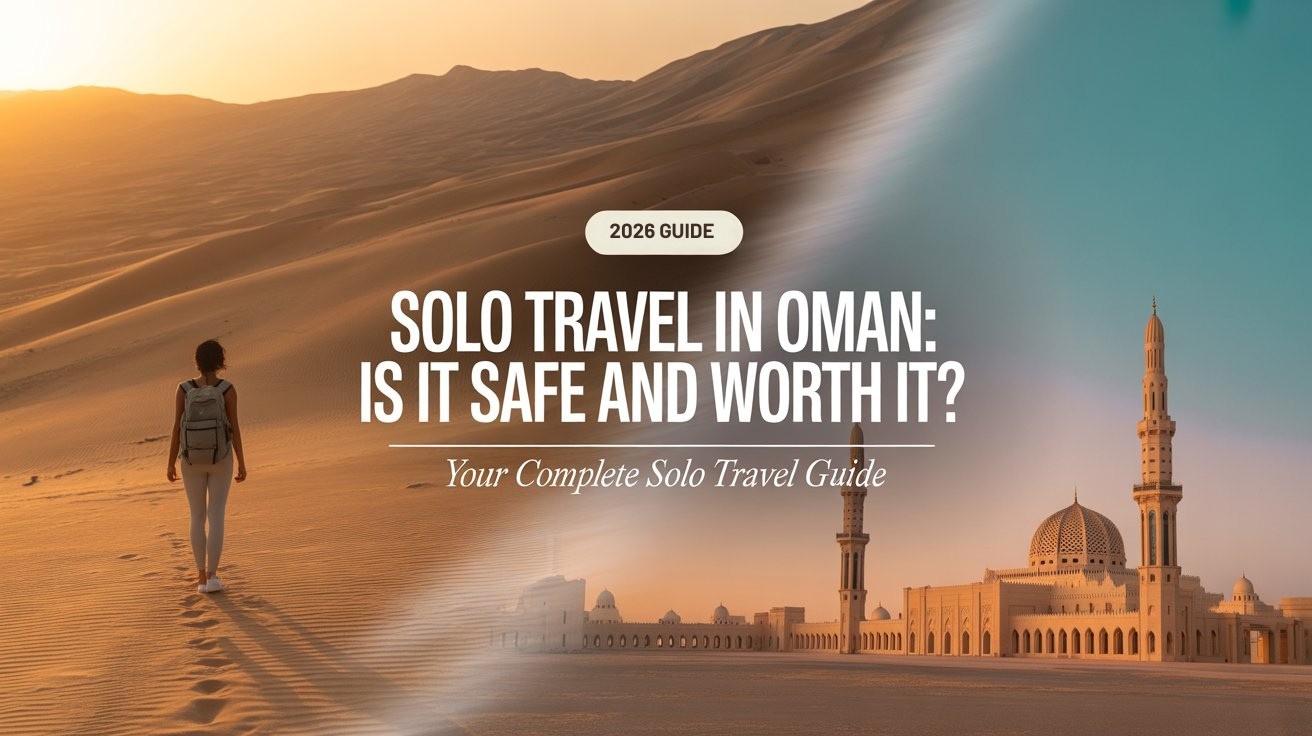
According to the Gallup Global Safety Report 2024, 94% of people in Oman said they feel safe walking alone at night, and the country scored 91 out of 100 on the Law and Order Index. That is the kind of statistic that instantly changes the conversation around solo travel in Oman. If you have been unsure about going, Oman’s safety record gives travellers a strong reason to look at it differently.
Honest View on Solo Travel in Oman
Solo travel in Oman is, genuinely, one of the best decisions you can make as an independent traveller. Oman is not a country that screams for attention the way Dubai does, and that is precisely what makes it special. You get ancient forts, rolling sand dunes, dramatic wadis, and a local population that is famously hospitable, all without the manufactured gloss of over-tourism.
Having looked closely at traveller experiences, blogs, and official safety data, the picture is consistent: Oman is safe, manageable, and deeply rewarding for people travelling alone. The country is clean, the infrastructure is solid, and locals are genuinely friendly. The one honest caveat is that Oman is not the easiest destination if you are on a very tight backpacker budget, but we will get to that.
For most solo travellers, the question is not whether Oman is worth it. The question is how to plan it properly so you do not miss what makes it extraordinary.
What Makes Oman Different From Other Destinations
There are plenty of Middle Eastern destinations that attract solo travellers, but solo travel in Oman stands out for a few reasons that are hard to quantify:
• Authenticity: Oman has deliberately chosen a slower pace of development. The old quarter of Muscat, the mudbrick forts of Nizwa, and the terraced farms of Jebel Akhdar look the way they have for centuries.
• Safety culture: Omanis have a deep sense of social responsibility toward guests. Harassment of tourists is rare and socially unacceptable.
• Landscape diversity: In one country you can have deserts, mountains, fjords, beaches, and lush green valleys — often within a few hours of each other.
• Relaxed pace: Unlike some neighbouring countries, Oman is not trying to sell you something at every corner. The slower rhythm suits solo travellers looking for immersive, reflective experiences.
• No party culture pressure: Oman is a Muslim country with strict alcohol laws outside hotels. This is not a party destination, which filters out a lot of the behaviour that makes some countries uncomfortable for solo travellers.
Is Oman Safe to Travel Alone?
Yes, solo travel in Oman is among the safest travel experiences in the entire world, and that is not marketing language. It is backed by independent data.
Is Oman Safe for Solo Female Travellers?
Is Oman safe for solo female travellers? The honest answer is yes, with some cultural awareness required. Female solo travellers consistently report feeling safe throughout Oman, in cities, on the road, and in rural areas. Harassment is rare.
A few practical points for women travelling alone:
• Dress modestly outside of beach and resort areas. Loose clothing covering shoulders and knees is both respectful and comfortable in the heat.
• In the capital Muscat, you will feel completely at ease. In smaller towns and villages, modest dressing goes a long way.
• Avoid walking alone very late at night in completely deserted areas — not because Oman is dangerous, but as a universal solo traveller principle.
• Locals are generally respectful and curious rather than intrusive. You are likely to receive more offers of tea and directions than anything unwanted.
Solo female travellers who have done Oman road trips, hiked wadis, and driven through rural Oman report overwhelmingly positive experiences. Oman is widely considered one of the most female-friendly destinations in the Arab world.
General Safety Points for All Solo Travellers
• Crime rates are very low. Petty theft exists but is uncommon compared to most tourist destinations globally.
• Roads are well-maintained and road safety standards are reasonably good in main routes.
• Emergency services are accessible and functional.
• Respect local customs and laws: no public display of affection, alcohol only in licensed venues, conservative dress in mosques and souqs.
Best Cities and Places to Visit Solo in Oman
One of the most common questions around Oman itinerary for solo travellers is: which places are best for a solo trip? Oman’s geography is generous, but solo travellers tend to find the most value in these destinations:
Muscat
Muscat is the natural starting point for solo travel in Oman. The capital is welcoming and navigable, with enough to fill three to four days. The Sultan Qaboos Grand Mosque, Mutrah Souq, Muttrah Corniche, and the Royal Opera House are all accessible and extraordinary. Muscat is also where you will find the widest range of accommodation options, from budget guesthouses to five-star hotels. Is Muscat safe for solo travellers? Absolutely. It is one of the safest capital cities in the world.
Before heading to Muscat, make sure your entry documents are in order. You can check your visa requirements and apply directly through Omanvisa.org.
Nizwa
Nizwa is the cultural heartland of Oman and a favourite for solo travellers who want to understand the country’s history. The Friday fort and souq are among the most atmospheric in the entire Middle East. The drive from Muscat through the Hajar Mountains is itself an experience. Check out more on the best tourist places in Oman, including Nizwa.
Wadi Shab and Wadi Bani Khalid
Wadis are Oman’s most iconic natural features, limestone gorges with pools of clear turquoise water. Wadi Shab near Sur requires a short boat crossing and a hike, and rewards you with swimming holes inside cave systems. Wadi Bani Khalid is more accessible and equally beautiful. Both are manageable alone with decent fitness.
Wahiba Sands (Sharqiyah Sands)
For most people, no Oman itinerary for solo travellers is complete without at least one night in the desert. Wahiba Sands is the most accessible desert experience from Muscat, and several camps offer comfortable accommodation. Sunrise over the dunes is worth every riyal.
Jebel Akhdar and Jebel Shams
The Green Mountain (Jebel Akhdar) offers terraced rose gardens, fruit orchards, and mountain air that is startling after the coastal heat. Jebel Shams, Oman’s highest peak, has walking trails and canyon views that rival anything in the region.
Salalah
Salalah in the far south transforms entirely during the Khareef monsoon season (July to September), turning from a desert city into a green, misty landscape. It is a world away from Muscat and well worth the flight south. If you are planning to visit specifically for Salalah, check the dedicated Salalah Visa options.
Getting Around Oman Without Stress
One of the most important Oman travel tips for solo travellers is to be realistic about transport. Oman is a large country with limited public transport outside Muscat.
Renting a Car
Renting a car is the best way to explore Oman independently. It gives you total freedom, and the roads outside main cities are often empty and scenic. A standard saloon car is fine for most routes; you only need a 4WD for off-road desert and mountain tracks. Rental starts from around $40 USD per day for a standard car.
Public Buses
ONTC buses connect Muscat to major cities like Nizwa, Sur, and Salalah, but schedules are infrequent — sometimes just one service per day on certain routes. This is workable if you plan carefully, but it limits your flexibility. Within Muscat, red city buses are affordable and reliable.
Taxis and Ride-Hailing
Taxis are available in Muscat and larger cities. Uber operates in Muscat. Always confirm the fare before getting in an unmarked taxi.
Domestic Flights
Oman Air and SalamAir operate domestic flights, which is the most practical way to get to Salalah from Muscat without using two days on the road.
Where Solo Travellers Should Stay in Oman
Accommodation is one of the key things to know before travelling to Oman — especially for solo travellers, because traditional hostel culture is limited.
• Hostels: There is a genuine shortage of hostels in Oman, particularly outside Muscat. The few that exist in Muscat have separate dorms for men and women, at around €10–15 per night.
• Budget hotels: Small guesthouses and budget hotels are widely available, particularly in Muscat, Nizwa, and Sur, at around OMR 15–25 per night (roughly $40–65 USD). Most include private bathrooms and are very clean.
• Desert camps: Overnight desert stays in Wahiba Sands range from basic camping to luxury glamping. Group sharing of costs works well here even if you are solo.
• Wild camping: Wild camping is legal and free in Oman and is a genuine highlight of any solo road trip. Mountain plateaus, wadi edges, and beach spots are all options. Do not camp in dry riverbeds due to flash flood risk.
• Mid-range and luxury hotels: Oman has exceptional mid-range and luxury options, particularly in Muscat and Salalah. Solo travellers willing to pay for a private room get outstanding value for money at the mid-range level.
For longer stays requiring a 30-day visa, check your options at the Oman 30 Days Visa.
Essential Oman Solo Travel Tips
Here are the most critical Oman travel tips for solo travellers, drawn from real travel experiences:
• Sort your visa before you fly: Most nationalities require a visa. Apply online before departure through omanvisa.org, it is fast, straightforward, and processed within 1–2 business days.
• Get a local SIM: Buy an Omani SIM card at the airport on arrival. Expect to pay around 5 OMR for 8–10GB data. Essential for offline maps in remote areas.
• Carry cash: Cards work in Muscat and major hotels, but smaller towns, wadis, and rural areas are cash-only. Always have Omani Rials on you.
• Respect dress codes: Pack a light scarf or shawl for mosque visits. Modest clothing is appreciated in souqs and smaller towns.
• Plan for desert heat: Summer temperatures can exceed 45°C inland. The best time for solo travel in Oman is October to March. Carry at least 2–3 litres of water per person on any hike.
• Download offline maps: Google Maps and Maps.me both work well in Oman. Download offline maps before driving into remote areas.
• Travel insurance: Do not skip this. Oman has good hospitals in Muscat, but medical care in remote areas is limited, and repatriation can be expensive.
• Photography etiquette: Always ask before photographing local people, particularly women. Military sites and some government buildings are off-limits.
Mistakes to Avoid on a Solo Trip to Oman
Things to know before travelling to Oman include a handful of common errors that solo travellers make:
• Underestimating distances: Oman is a large country. What looks like a short drive on a map can take 3–4 hours on winding mountain roads. Build buffer time into every day.
• Not booking accommodation in advance during peak season: October to March is busy, especially for desert camps and Jebel Akhdar. Book ahead.
• Skipping the Oman tourist visa pre-application: Some travellers assume they can get a visa on arrival. While this is possible for some nationalities, it is far safer to apply online in advance.
• Attempting wadis without basic preparation: Some wadis require hiking in water. Bring appropriate shoes, not flip-flops, and never enter slot canyons if rain is forecast upstream.
• Not checking the khareef season: If visiting Salalah, timing matters enormously. The monsoon season (July–September) is magical; outside this window, the landscape is dry and far less dramatic.
• Assuming public transport will work: Bus timetables in Oman are unreliable for detailed itinerary planning. If you have a fixed schedule, rent a car or book transfers in advance.
• Ignoring Friday timings: Friday is the holy day. Many souqs, forts, and businesses open late (after noon prayer) or not at all. Plan your Nizwa souq visit for Saturday morning instead.
Is Oman Expensive for Solo Travel?
Is Oman expensive for solo travel? It sits in the moderate-to-expensive range for the Middle East. According to Budget Your Trip, budget travellers spend around $141 USD per day, mid-range travellers around $301 per day, and a solo week in Oman costs approximately $1,722 USD on average.
The cost drivers for solo travellers specifically:
• Car rental: The single biggest cost for most solo travellers, since sharing is not an option. Budget around $40 USD/day for a standard saloon.
• Accommodation: Solo travellers pay the full room rate. Hostels (where available) cost €10–15/night; budget hotels €25–35/night.
• Food: Refreshingly affordable. A meal at a local restaurant costs 1–3 OMR ($2.50–8 USD). Supermarket food is cheap.
• Visa: Oman offers tourist visa options for short and longer stays, depending on your travel plans. Before applying, review the latest visa categories, eligibility rules, and official requirements under Oman Visa Types.
The honest summary: solo travel in Oman is not a budget backpacker destination in the Southeast Asian sense. But it offers enormous value relative to the quality of experience — landscapes, safety, and cultural richness that very few countries can match at any price.
Final Thoughts on Travelling Solo in Oman
Solo travel in Oman rewards those who plan thoughtfully and arrive with an open mind. It is one of those rare destinations where reality exceeds expectation — where the landscape is more dramatic in person, the people are warmer than you anticipated, and the absence of crowds means you often have ancient forts and canyon pools entirely to yourself.
Solo travel in Oman is safe, it is manageable, and it is genuinely worth every planning hour and every riyal spent. The combination of safety data, cultural openness, and sheer natural beauty makes it a destination that belongs on every serious solo traveller’s list.
Start with your visa. The fastest way to begin is through omanvisa.org, where your Oman tourist visa can be processed in as little as 24 hours. From there, the Empty Quarter, the frankincense souq of Salalah, and the turquoise pools of Wadi Shab are waiting.
Frequently Asked Questions
Is Oman Safe to Travel Alone?
Yes. Oman is one of the safest countries in the world for solo travellers. According to Gallup’s 2024 Global Safety Report, Oman ranked 4th globally on the index measuring how safe people feel walking alone at night. Crime rates are very low, and visitors consistently report feeling safe throughout the country.
Is Muscat Safe for Solo Travellers?
Muscat is extremely safe for solo travellers, including women. The capital has low crime, well-lit public areas, and a strong police presence. It is one of the most relaxed and navigable capital cities in the Arab world. Is Oman safe for solo female travellers in Muscat specifically? Travellers overwhelmingly say yes — with sensible dress and standard awareness, you will feel completely comfortable.
Can You Travel Around Oman Without a Car?
You can travel between major cities on ONTC buses, but bus frequency is very limited — some routes operate only once per day. For an Oman itinerary for solo travellers that covers wadis, mountains, and desert, a rental car is effectively essential. Oman is simply not set up for hop-on-hop-off independent travel without personal transport.
What Are the Best Places in Oman for Solo Travellers?
The best places for a solo trip in Oman include Muscat (culture and city life), Nizwa (forts and souqs), Wadi Shab and Wadi Bani Khalid (nature and hiking), Wahiba Sands (desert experience), Jebel Akhdar and Jebel Shams (mountains), and Salalah (unique monsoon landscape). Solo travel in Oman covers an extraordinary range in a single trip.
Is Oman Expensive for Solo Travel?
Oman is moderately expensive compared to destinations like Southeast Asia, but very reasonable for the quality of experience. Budget solo travellers can manage on approximately $141 USD per day, mid-range on $301 per day. The main solo cost premium is car rental, since you cannot split that cost. Food is very affordable — local restaurant meals cost $2.50–8 USD.
Where Should Solo Travellers Stay in Oman?
Hostel options are very limited outside Muscat, so most solo travellers stay in budget guesthouses (€25–35/night), mid-range hotels, or Airbnbs. Wild camping is legal, free, and popular. Desert camps in Wahiba Sands offer a range of solo-friendly options from basic to luxury.
What Are the Best Oman Solo Travel Tips?
The most important Oman travel tips for solo travellers: apply for your visa online before departure at omanvisa.org, rent a car for flexibility; buy a local SIM at the airport; carry cash outside Muscat; travel between October and March to avoid extreme heat; respect local dress codes; and always carry 2–3 litres of water on hikes. Knowing these things before travelling to Oman will make your trip significantly smoother.


Leave a Reply